 Swift Roofing


Roof leak detection
A stain on the ceiling can be feet away from where water is actually getting in. Book a free inspection worth £199 and get the real source traced, photographed and fixed.
“Had a leaky roof that had been problematic for a while. Luke and his team have future proofed...” Verified Checkatrade review, PE30, King's Lynn
No obligation. No hard sell. We price from a proper inspection, never a guess over the phone.
Free roof inspection worth £199
Photographs of what we find, a written fixed price, and no pressure to book.
Water rarely enters a roof directly above the stain that shows up on your ceiling. It tracks along a rafter, follows a batten, or runs down the back of a membrane before finally dripping through at the lowest point it can find, which means chasing the visible symptom often means fixing the wrong spot entirely. Proper leak detection means tracing the path backward from the stain to the actual point of entry.
How we trace a leak
- Inspection of the roof exterior first, checking flashing, valleys, ridge and tile condition around the suspected area
- Loft inspection where accessible, tracing staining and damp along the timbers and membrane back toward its source
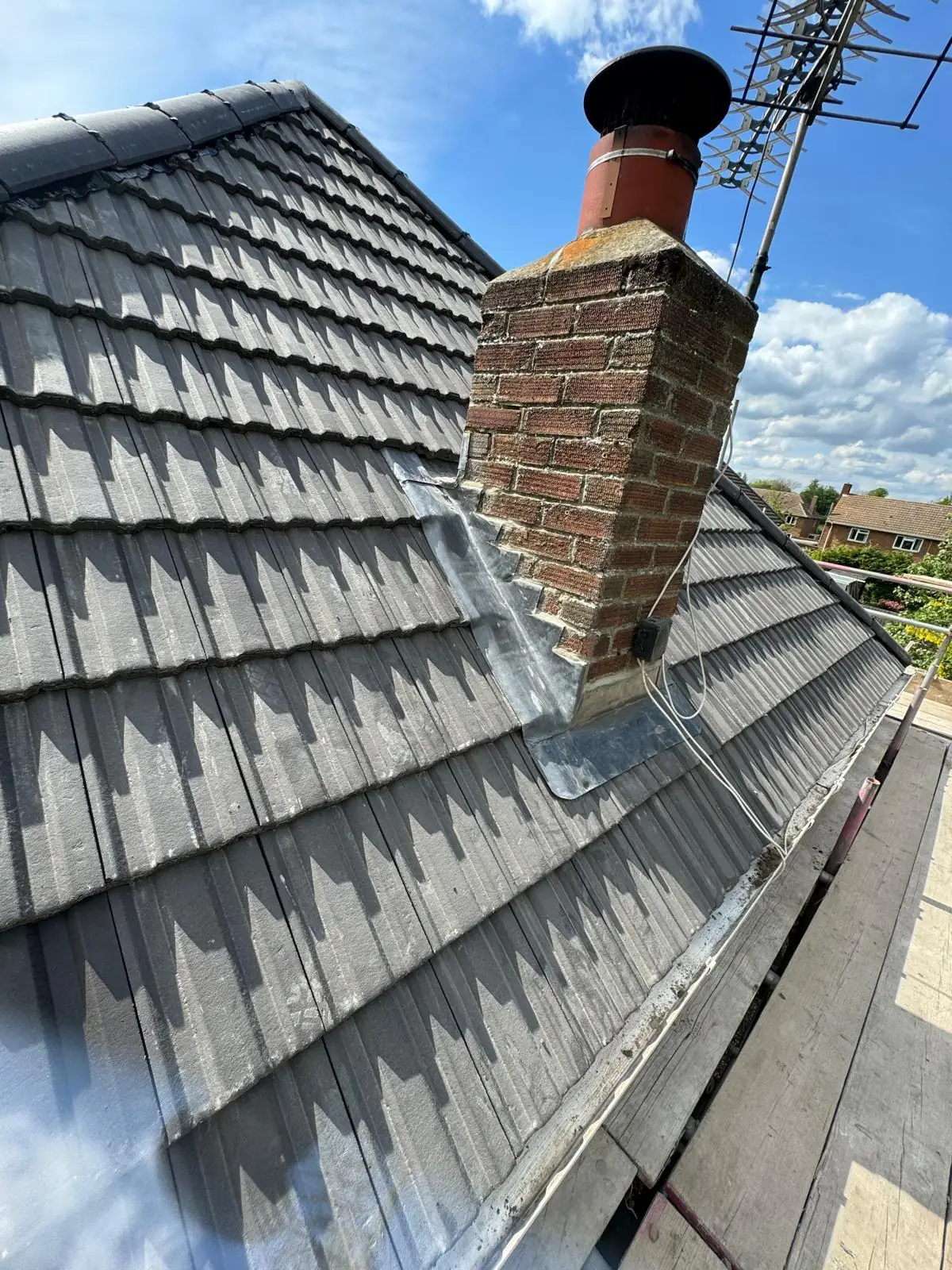
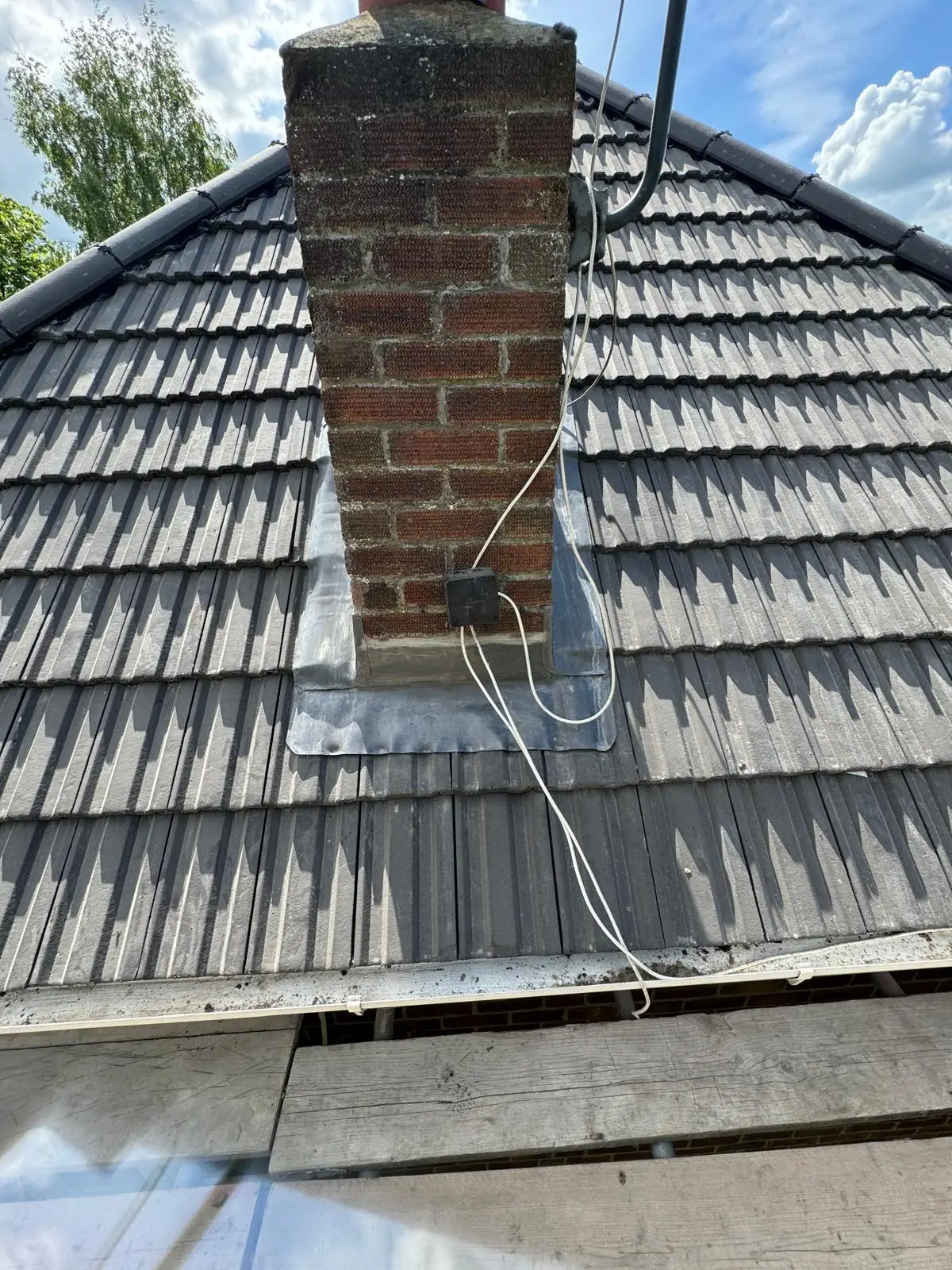
- Checking the usual culprits first: lead flashing around chimneys and valleys, which causes more leaks than any other single point on a roof
- Testing suspect areas with water where the source is not immediately obvious
- Photographing the confirmed source before any repair work happens
The most common causes, in order
In our experience across hundreds of jobs, the ranking rarely changes: lead flashing failure around chimneys, valleys and abutments comes first, followed by slipped or cracked tiles, then a torn or sagging breathable membrane, then blocked valley gutters forcing water back under the tiles. Roof windows and their flashing kits are a common fifth. Knowing this order means we check the highest probability causes first rather than working blind.
Why the same leak can appear intermittently
A leak that only shows up in heavy or wind-driven rain, and seems to vanish in between, is often a flashing or valley problem where water only overwhelms the detail under specific conditions. This intermittent pattern frustrates a lot of homeowners because it makes the leak look like it has gone away, when the underlying fault is still there waiting for the next storm from the right direction. We test suspect areas deliberately to reproduce the conditions rather than wait for the weather to cooperate, using a hose to simulate driving rain from the direction that matches when the leak was described appearing.
Condensation is not a leak
Not every damp patch is water coming in from outside. Condensation forming inside a poorly ventilated loft space can look identical to a leak but needs a completely different fix, usually improving loft ventilation rather than roof repair work. We check for this distinction as part of every inspection. See our condensation in the loft guide for more detail.
Once the source is found
We photograph the confirmed cause and give you a written fixed price for the actual repair needed, whether that is lead flashing, a run of tile replacement, or a section of membrane. If the underlying cause is more widespread than a single point repair, we will tell you honestly.
Signs worth checking
See our signs of a roof leak guide for the early warning signs worth acting on before the damage spreads further into ceiling plaster and insulation.
Documenting the source before repair
Once the source is confirmed, we photograph it clearly before starting the repair, useful evidence if you later need to show a surveyor, a buyer or an insurer exactly what was found and where, rather than relying on a description alone. That same evidence goes into the written summary you keep after the job is finished.
Acting quickly matters
A small leak left untraced for months can spread damage well beyond the original entry point, saturating insulation, staining plasterboard and, in the worst cases, encouraging rot in the timbers nearby. Tracing and fixing the source early keeps the job small and the cost proportionate to the original problem.
Areas we cover
Leak detection across Wisbech, King's Lynn, Peterborough, Cambridge and the rest of Cambridgeshire, Norfolk, west Suffolk and south Lincolnshire.
Four steps, no surprises
You call or send the form
Luke answers, or calls you straight back. Tell him what is happening and roughly where.
We come and look
A proper inspection, not a guess over the phone. Free, and worth £199.
You get photographs and a fixed price
You see what we saw. The price is written down and it does not move.
We do the work and clear up
Guaranteed in writing for 10 years. Scaffold down, site swept, no mess left behind.
What customers actually said
132 verified reviews across Google and Checkatrade. These are real, and you can read every one of them on the platforms themselves.
Trustable quality roofers, a great team
Had a leaky roof that had been problematic for a while. Luke and his team have future proofed, so we should no longer have any problems with it. A lovely, helpful team and when we need work done elsewhere, won't hesitate to give them a call.
Nothing was too much trouble
Had quotes for our very tricky old Victorian cottage. Although all quotes were similar it was Luke's attitude and personality that got the job and we couldn't be happier, nothing was too much trouble and his workers are top drawer.
Worked tirelessly through the heat wave
Luke and his guys are amazing. Very professional, courteous and did a wonderful job of our roof. Left the site clean and tidy, worked tirelessly through the heat wave, and we are very happy with the price. 10 out of 10 for Swift.
Straight answers before you book
How much should I pay for leak detection?
Leak detection is included as part of our free inspection worth £199. If a repair is then needed, a small repair usually runs £150 to £300, a larger one £500 to £1,500. See our roof repair cost guide for more.
How can you tell a dodgy roofer?
Anyone who quotes a repair without tracing the actual source first is guessing, and a guessed repair often does not stop the leak. Our guide to spotting a dodgy roofer covers the wider warning signs.
How long does leak detection take?
Most leaks are traced within the same visit as the inspection, roughly 30 to 60 minutes depending on complexity and loft access.
Do I need scaffolding for leak detection?
Usually not for the detection itself, we can inspect from a ladder or the loft. Scaffolding is only needed if the eventual repair requires it.
Does my insurance cover leak repair?
Storm and impact damage is usually covered, gradual wear is not. If a storm is involved, see our storm damage repair page.
Could it be condensation rather than a leak?
Possibly. Condensation in a poorly ventilated loft can mimic a leak closely. Our condensation in the loft guide explains the difference, or we can check it directly during the inspection.
Do you cover my area?
Yes, across Cambridgeshire, Norfolk, west Suffolk and south Lincolnshire. Call 01945 897430.
Get the real source of your leak found, not guessed at
Free inspection worth £199, the actual cause traced and photographed, and a written fixed price to fix it. Call 01945 897430.
No obligation. No hard sell. We price from a proper inspection, never a guess over the phone.