 Swift Roofing


Signs of a roof leak and where to look
A ceiling stain rarely sits directly under the actual leak. Water travels along timbers and insulation before it shows, which is why finding the real source usually means going up into the loft, not just looking at the mark below it.
By the time a leak shows itself as a stain on a ceiling or a damp patch on a wall, water has usually already been getting in for a while. Catching the early signs, both inside the house and outside on the roof, saves the bigger repair that a leak left running for a season causes.
Signs inside the house
- A brown or yellow ring on a ceiling, which often marks the edge of where water has spread, not the point it entered
- Damp patches on an upstairs wall, especially near a chimney breast or where a wall meets the roofline
- Peeling paint or bubbling plaster on a ceiling
- A musty smell in a bedroom or landing that wasn't there before
- Visible mould, particularly in a corner where a wall meets the ceiling
- Water actually dripping, which is the leak already at a late stage rather than an early sign
Signs in the loft
The loft is where a leak is easiest to trace, because you can often see the actual path water has taken rather than just where it ended up showing downstairs.
- Dark staining or streaking on the felt or membrane under the tiles
- Damp or discoloured timber, especially where a rafter meets a chimney or a valley
- Wet or compressed insulation in one specific area rather than generally damp throughout
- Daylight visible through the roof covering where there shouldn't be any
- A musty smell that's stronger in the loft than the rest of the house
Signs on the roof itself
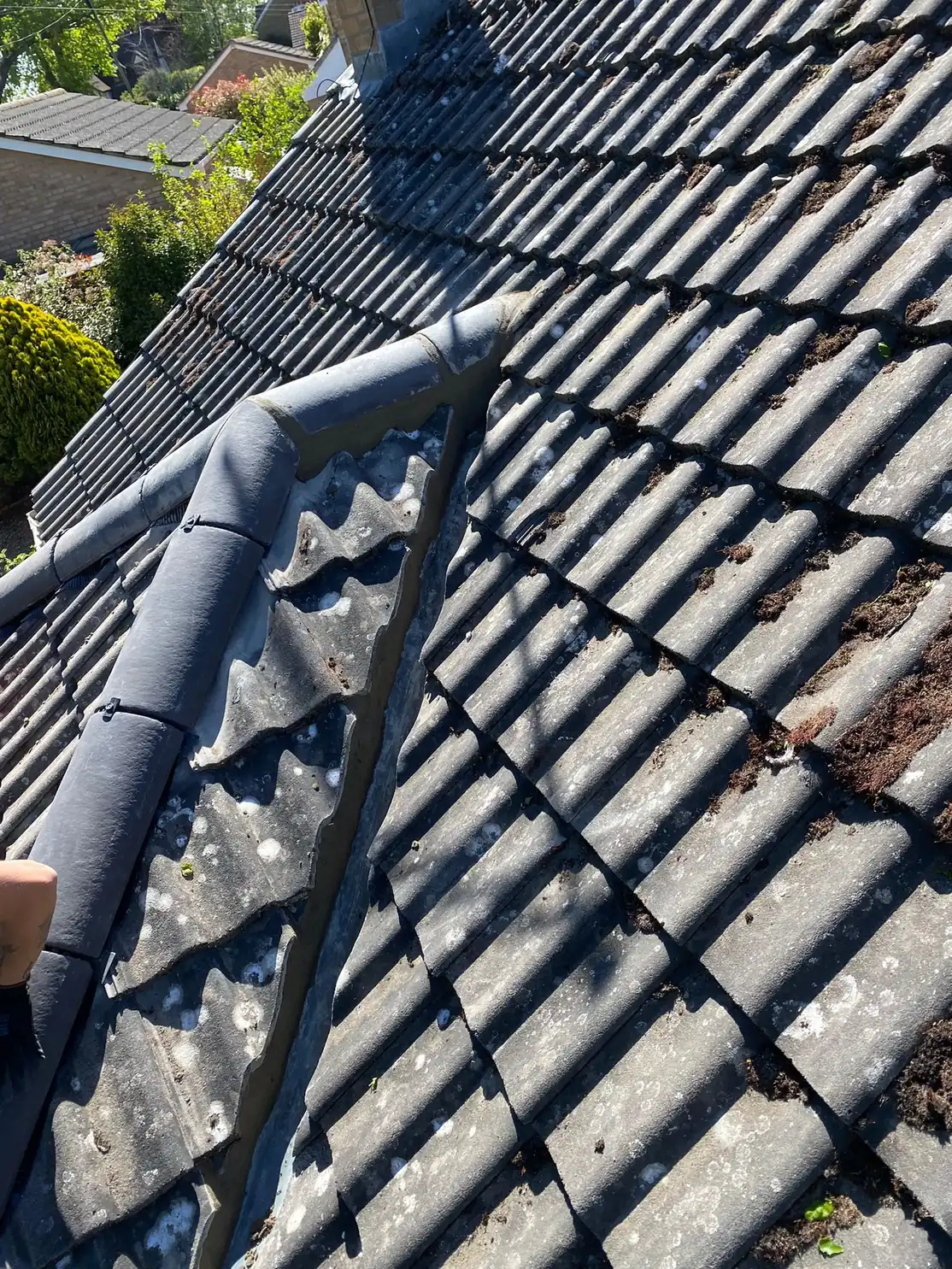
- Missing, slipped or cracked tiles, which are one of the most common leak points
- Lifted or split flashing around a chimney, valley or roof window
- Moss or debris built up around a valley, holding water against the covering
- Sagging felt visible on a flat roof section, holding standing water after rain
- Gaps or gaping joints where a conservatory roof meets the main house
The most common leak points
- Around chimneys, where flashing has to seal a join between two different structures that move slightly against each other over time
- Valleys, where two roof slopes meet and a large volume of water is funnelled through a single, narrow channel
- Roof windows and skylights, where the seal around the frame can fail well before the glazing itself does
- Verges and abutments, where a roof meets a wall or a neighbouring property, and flashing or pointing there has weathered
- Where a conservatory or extension roof joins the main house, a junction that's often not as well detailed as the rest of the roof
Knowing these are the usual suspects helps narrow down where to look first, whether that's in the loft with a torch or from outside once someone's up on the roof itself.
How to find out where your roof is actually leaking
Start in the loft with a torch during daylight, looking for staining, damp timber or a patch of daylight coming through. That gives a rough location. From there, a proper roof inspection from outside, ideally from a ladder or scaffold rather than the ground, is what actually confirms the entry point, since the water's path inside the loft and its entry point on the roof aren't always directly above each other. Water can travel several feet along a rafter or along the underside of felt before dropping down into the loft space.
Guessing at a leak's source and patching the wrong spot is one of the most common ways a repair fails and the leak comes straight back. Our leak detection service traces the actual path before anything gets patched.
Does house insurance cover roof leaks in the UK?
It depends on the cause. A leak caused by sudden damage, storm damage to tiles, a fallen branch, or similar, is usually a matter for your insurer to consider. A leak that's developed gradually, through weathered flashing or ageing felt reaching the end of its life, is treated as maintenance and wear and tear, which most policies don't cover. Our storm damage and insurance claims guide covers how insurers usually draw that line and what they ask to see.
Is a flat roof leak covered by my home insurance?
The same principle applies to flat roofs as pitched ones. Sudden storm damage to a flat roof covering is generally an insurance matter. A felt or EPDM covering that's simply reached the end of its working life and started to fail from age is treated as wear and tear rather than an insurable event.
Can a small leak be left until it gets worse?
Leaving it is the single most common way a small, cheap repair turns into a much larger one. Water that gets into timber doesn't dry out on its own between rainfall, it sits there, and over months it leads to rot in rafters, damaged insulation, and eventually damp coming through into living spaces. A leak caught early is usually a small, affordable repair. Left through a winter, it often isn't.
What to do next
If you've spotted any of the signs above, particularly staining in the loft or a mark on a ceiling, book an inspection rather than waiting to see if it gets worse. Swift Roofing offers a free roof inspection, worth £199, with photographs so you can see exactly what's been found, and same-day callout is available across Wisbech, King's Lynn, Peterborough and Norwich, 8am to 6pm, seven days.
Want the number for your own roof?
Every roof is different and a guide can only take you so far. A free inspection worth £199 gets you photographs of what is actually up there and a written fixed price, with no pressure to book.
Free roof inspection worth £199
Photographs of what we find, a written fixed price, and no pressure to book.
Straight answers before you book
How do I find out where my roof is leaking?
Start in the loft with a torch, looking for staining on the felt, damp timber, or daylight coming through the covering. That narrows down the general area. Confirming the exact entry point from outside usually needs someone up on the roof, since water often travels along timbers before it shows in the loft.
Does house insurance cover roof leaks in the UK?
Sudden damage, such as a storm-damaged tile or a fallen branch, is generally covered. A leak from ageing flashing or felt that's simply reached the end of its life is treated as wear and tear, which most policies exclude.
Is a flat roof leak covered by my home insurance?
Only if the cause was sudden, such as storm damage. A flat roof covering failing from age rather than a specific event is treated the same as any other wear and tear roof issue, and isn't usually covered.
What are the first signs of a roof leak?
A faint musty smell in the loft or a bedroom, a small stain starting to form on a ceiling, or damp, discoloured timber visible in the loft are usually the earliest signs, well before any dripping starts.
Can a small leak be left until it gets worse?
It's the most common way a small repair becomes an expensive one. Trapped water doesn't dry out on its own, and left through a season it leads to rotten timber and damaged insulation that cost far more to put right than the original leak would have.
Get the actual source found
Free roof inspection worth £199, with photographs, plus dedicated leak detection so the repair goes on the real cause, not a guess. Same-day callout, 8am to 6pm, seven days. 01945 897430 or 01603 851759.
No obligation. No hard sell. We price from a proper inspection, never a guess over the phone.