 Swift Roofing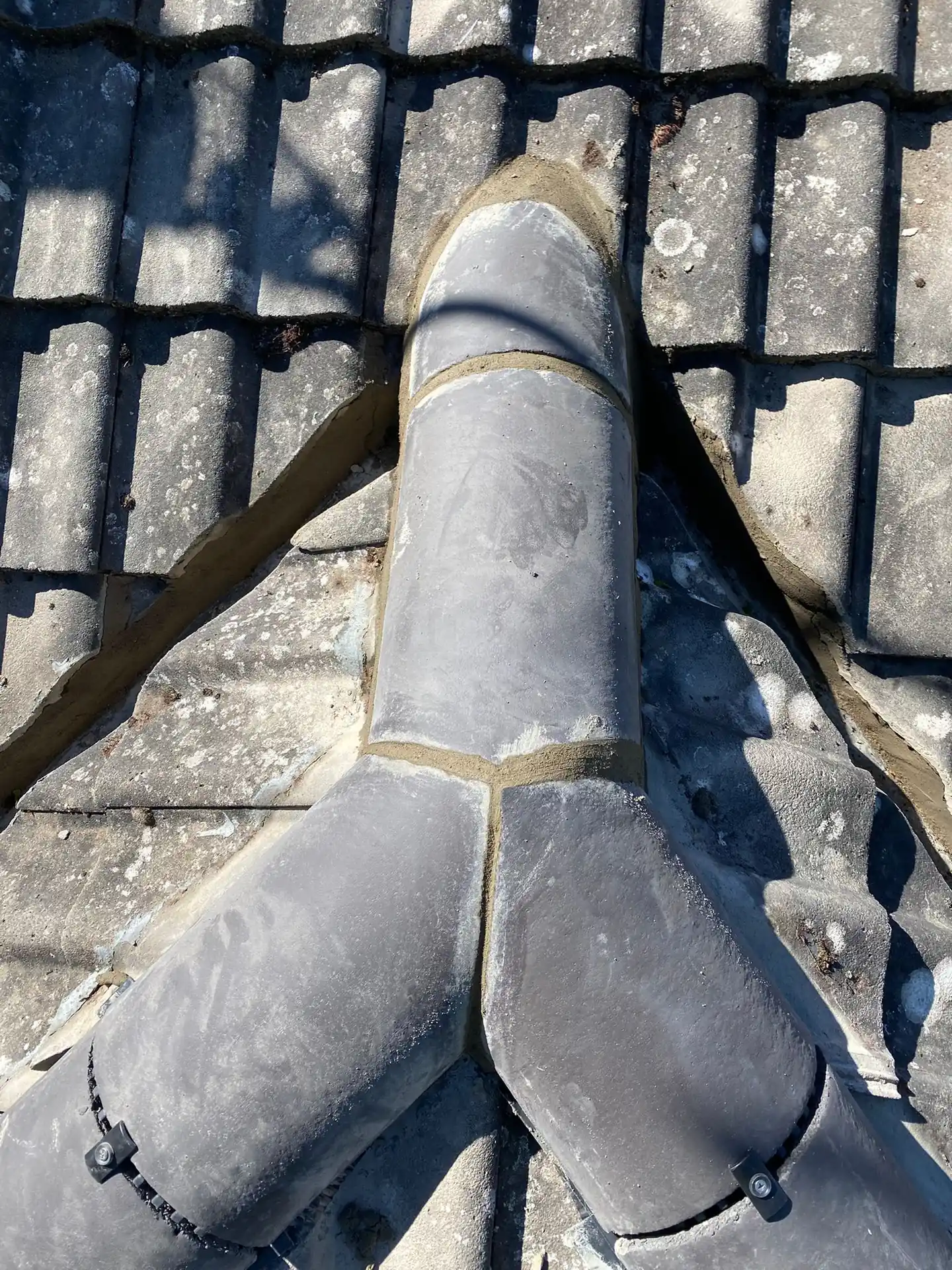


Lead flashing repair and valleys
Perished lead flashing is the single most common cause of a leak that looks like a roof problem. Book a free inspection worth £199 for a written fixed price on proper code 4 lead.
“Had a leaky roof that had been problematic for a while. Luke and his team have future proofed...” Verified Checkatrade review, PE30, King's Lynn
No obligation. No hard sell. We price from a proper inspection, never a guess over the phone.
Free roof inspection worth £199
Photographs of what we find, a written fixed price, and no pressure to book.
Lead flashing repair fixes the single most common cause of roof leaks, more common than tiles, the membrane or the ridge. It sits at every junction where a roof meets something else, a chimney, a wall, a valley between two slopes, and it is the detail that has to shed water perfectly in every direction at once. When it fails, the leak often shows up somewhere else entirely, which is why so many "roof leaks" turn out to be a lead problem once properly traced.
Where lead flashing is used
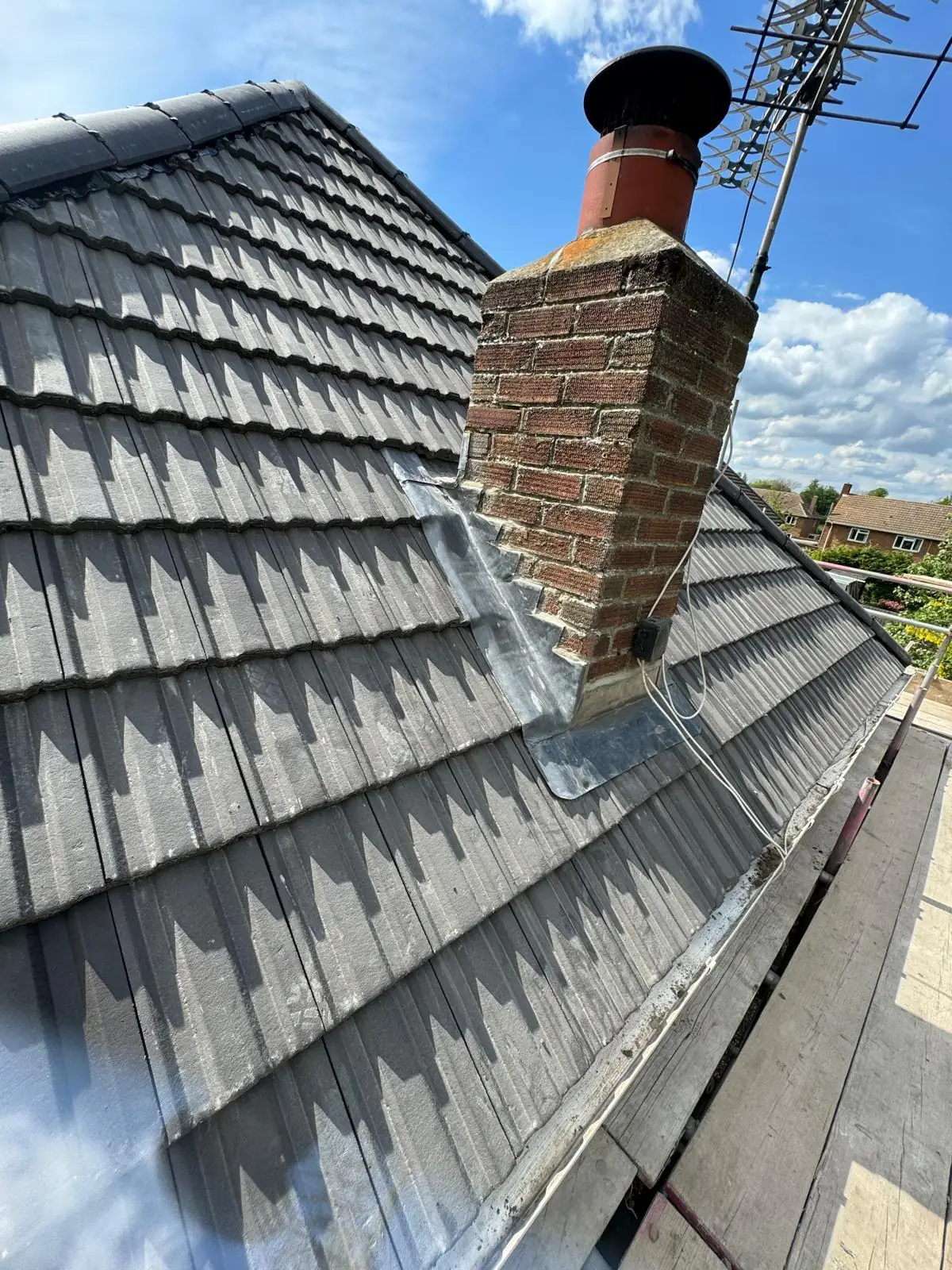
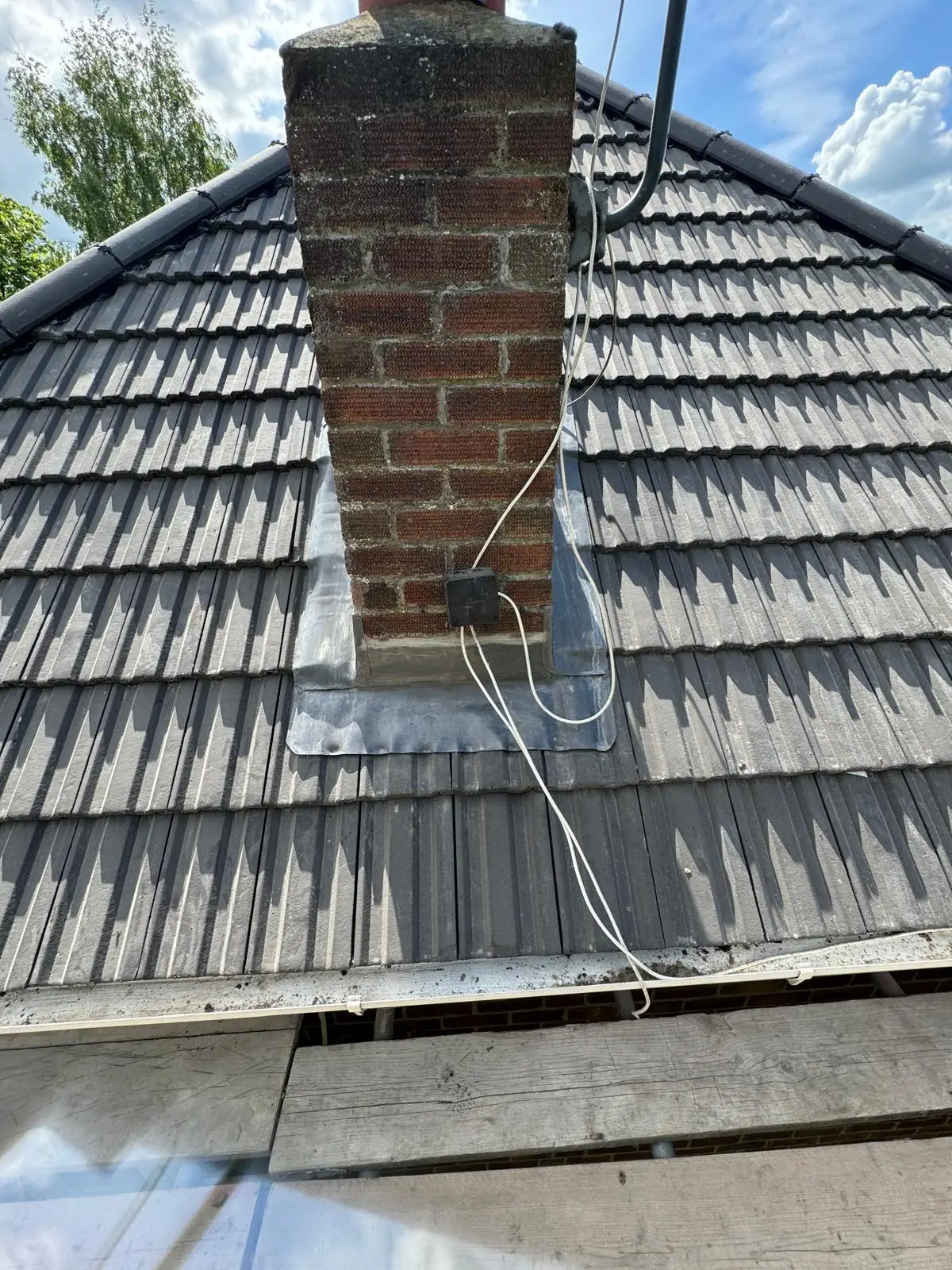
- Chimney flashing, wrapping around the base of the stack where it meets the roof
- Valleys, the internal channel where two roof slopes meet, carrying a significant volume of water
- Abutments, where a roof meets a vertical wall, such as at an extension
- Soakers, small individual pieces woven between tiles at a junction, particularly around dormers and bay windows
- Roof windows, where a manufacturer flashing kit is fitted around the frame
Why lead fails
Lead itself is extremely durable and can last a century when correctly fitted, but the joints, pointing and dressing around it deteriorate faster, mortar pointing along the top edge of a flashing cracking and lifting, or a soaker corroding and letting water track sideways. Poor original installation, mastic sealant used instead of properly dressed and pointed lead, is a common cause of premature failure we see regularly.
How we repair or replace it
We use code 4 lead as standard, dressed carefully into the roof junction and pointed correctly into the brickwork or tile detail, not sealed with mastic as a quick fix. Where a full flashing has failed, it is replaced entirely rather than patched, since a patch on failed lead rarely holds for long. Valleys are relined completely where the existing lead has split or corroded through.
Why mastic is not a fix
Mastic sealant painted over a flashing joint might stop a leak for a season or two, but it degrades in UV light and temperature cycling far faster than lead itself, and it is not how flashing is meant to work. We do not use it as a substitute for properly dressed and pointed lead.
If you can see a bead of black or grey sealant smeared along a flashing edge on your roof, that is usually evidence a previous repair was a temporary fix rather than a genuine one, and it is worth having it looked at properly before the next heavy rain finds the gap it is currently hiding.
Every flashing job we complete is checked with water where practical before we leave, confirming water is genuinely being shed away from the junction rather than assuming a neat visual finish means the repair will hold.
Cover flashings and step flashings
Different junctions need different flashing techniques, a stepped flashing along a sloped abutment, a continuous cover flashing along a straight one, and each has to overlap correctly with the layer above it so water is always directed downward and outward, never given a route to travel sideways or upward against gravity.
What you get
Lead flashing work carries our 10 year written workmanship guarantee. If you are not sure whether lead flashing is the cause of a leak you are experiencing, see our roof leak detection page, or our wider chimney repairs and leadwork page.
Areas we cover
Lead flashing repair across Wisbech, King's Lynn, Cambridge, Norwich and the rest of Cambridgeshire, Norfolk, west Suffolk and south Lincolnshire.
Four steps, no surprises
You call or send the form
Luke answers, or calls you straight back. Tell him what is happening and roughly where.
We come and look
A proper inspection, not a guess over the phone. Free, and worth £199.
You get photographs and a fixed price
You see what we saw. The price is written down and it does not move.
We do the work and clear up
Guaranteed in writing for 10 years. Scaffold down, site swept, no mess left behind.
What customers actually said
132 verified reviews across Google and Checkatrade. These are real, and you can read every one of them on the platforms themselves.
Trustable quality roofers, a great team
Had a leaky roof that had been problematic for a while. Luke and his team have future proofed, so we should no longer have any problems with it. A lovely, helpful team and when we need work done elsewhere, won't hesitate to give them a call.
Nothing was too much trouble
Had quotes for our very tricky old Victorian cottage. Although all quotes were similar it was Luke's attitude and personality that got the job and we couldn't be happier, nothing was too much trouble and his workers are top drawer.
Worked tirelessly through the heat wave
Luke and his guys are amazing. Very professional, courteous and did a wonderful job of our roof. Left the site clean and tidy, worked tirelessly through the heat wave, and we are very happy with the price. 10 out of 10 for Swift.
Straight answers before you book
How much should I pay for lead flashing repair?
A single flashing repair usually falls into the £150 to £300 small repair range, a full valley reline or multiple flashings £500 to £1,500. See our roof repair cost guide for more.
How can you tell a dodgy roofer?
The clearest sign on lead work is mastic sealant smeared over a joint instead of properly dressed and pointed lead. Our guide to spotting a dodgy roofer covers this and more.
How long does lead flashing last?
Lead itself can last a century when correctly fitted. It is usually the pointing or dressing around it, or poor original installation, that fails first, often within a decade or two if not done properly.
Do I need scaffolding for lead flashing repair?
Usually yes, since most flashing sits at height around a chimney or valley junction, and it is included in the fixed price.
Is my leak actually a lead flashing problem?
Very possibly. Lead flashing failure is the single most common cause of a leak that appears to be a general roof problem. Our roof leak detection traces the actual source before any repair is quoted.
Will you use mastic to fix my leak?
No. We use properly dressed and pointed code 4 lead as standard, not mastic, which is a temporary cover-up rather than a genuine repair.
Do you cover my area?
Yes, across Cambridgeshire, Norfolk, west Suffolk and south Lincolnshire. Call 01945 897430.
Get the real cause of your leak fixed properly
Free inspection worth £199, code 4 lead dressed and pointed correctly, and a 10 year written guarantee. Call 01945 897430.
No obligation. No hard sell. We price from a proper inspection, never a guess over the phone.